How to Create Optimal Sleep for Longevity: Sleep Hygiene, Co-Sleeping and Sex
Today we’re breaking down:
The hormonal physiology of sleep
Sleep hygiene beyond clichés
Supplements and peptides for sleep
Sleeping together vs sleeping apart
Dogs in the bed
Babies and co-sleeping
And how all of this ties into lifespan and healthspan
The Longevity Biology of Sleep
Sleep is an active biologic repair state.
Glymphatic Clearance
During slow-wave sleep, interstitial space increases by ~60%, enhancing clearance of β-amyloid and tau proteins (Xie et al., Science, 2013). Sleep restriction increases amyloid burden (Ju et al., Brain, 2017).
Sleep fragmentation impairs this process — even if total hours look “adequate.”
Cardiometabolic Regulation
Sleep restriction increases insulin resistance within days (Spiegel et al., Lancet, 1999). Both short and fragmented sleep are associated with higher hypertension risk and increased inflammatory markers.
Meta-analysis shows both short and long sleep durations are associated with increased all-cause mortality (Cappuccio et al., Sleep, 2010).
Telomeres
Short sleep duration is associated with shorter leukocyte telomere length (Jackowska et al., Sleep, 2012). Chronic stress + sleep loss appears synergistic in accelerating telomere shortening.
If you care about cellular aging — sleep architecture matters.
The Hormonal Physiology of Sleep
Growth Hormone & Slow-Wave Sleep
Up to 70% of daily growth hormone (GH) secretion occurs during slow-wave sleep (Van Cauter et al., Journal of Clinical Investigation, 1997).
Fragmented sleep:
Reduces GH pulse amplitude
Impairs tissue repair
Reduces lipolysis
Impairs muscle recovery
If deep sleep is compromised — your anabolic signaling is compromised.
In aging adults, loss of slow-wave sleep contributes to somatopause.
Testosterone
One week of sleep restriction to 5 hours per night reduces daytime testosterone by 10–15% in healthy young men (Leproult & Van Cauter, JAMA, 2011).
Chronic sleep disruption lowers:
LH pulse amplitude
Total testosterone
Free testosterone
This affects:
Libido
Erectile function
Muscle mass
Mood
Motivation
In women, sleep disruption also alters androgen and estrogen balance, impacting libido and metabolic health.
Cortisol & the HPA Axis
Healthy sleep creates a predictable cortisol curve
Low at night
Gradual pre-waking rise
Morning peak
Sleep fragmentation elevates nocturnal cortisol and flattens diurnal rhythm (Leproult et al., Journal of Clinical Endocrinology & Metabolism, 1997).
Chronic elevation:
Impairs insulin sensitivity
Promotes visceral adiposity
Impairs immune regulation
Accelerates biological aging
If your HRV is suppressed and your overnight HR is elevated, your HPA axis may be chronically activated.
Melatonin
Melatonin is not just a “sleep hormone.”
A mitochondrial antioxidant
An anti-inflammatory signaling molecule
A circadian regulator
Reduced melatonin secretion is associated with increased cancer risk in shift workers (Straif et al., Lancet Oncology, 2007).
Blue light exposure suppresses melatonin release. Alcohol fragments melatonin signaling.
If you suppress melatonin chronically, you are impairing cellular recovery.
Insulin & Leptin/Ghrelin
Sleep restriction reduces insulin sensitivity within days (Spiegel et al., Lancet, 1999).
Reduces leptin
Increases ghrelin
Increases hunger
Promotes visceral fat gain
Chronic sleep debt promotes metabolic syndrome.
Prolactin & Oxytocin
Prolactin peaks during sleep and supports immune regulation.
Oxytocin — enhanced by emotional safety and intimacy — lowers stress reactivity and improves parasympathetic tone.
Secure attachment and relational stability reduce nocturnal cortisol.
Bottom Line
If your sleep is fragmented:
GH decreases
Testosterone decreases
Cortisol increases
Insulin sensitivity worsens
Melatonin signaling drops
Appetite dysregulates
Sleep hygiene is about controlling inputs that affect:
Melatonin secretion
Cortisol rhythm
Core body temperature
Adenosine accumulation
Sympathetic tone
Glucose metabolism
Circadian Anchoring (Non-Negotiable)
Your brain’s suprachiasmatic nucleus runs on predictability.
Wake up at the same time daily (±30 minutes), even on weekends.
Get 5–15 minutes of outdoor light within 30 minutes of waking.
Keep consistent meal timing.
Exercise at roughly the same time each day.
Do NOT Sleep in 2–3 hours on weekends (social jet lag increases cardiometabolic risk).
Do NOTShift sleep times wildly during travel without light management.
Irregular sleep timing independently increases metabolic dysfunction and cardiovascular risk — even when total sleep time is adequate.
Light Discipline
Light is the dominant regulator of melatonin.
Morning
Bright light → suppresses melatonin → increases cortisol appropriately → anchors circadian rhythm.
Evening
Blue light suppresses melatonin release.
Dim lights 60–90 minutes before bed.
Use warm spectrum lighting.
Use blue light–blocking glasses if screen exposure is unavoidable.
Lower overhead lighting.
Do NOT Scroll intensely stimulating content in bed.
Do NOT Use bright LED overhead lights at night.
Do NOT Fall asleep to flashing screens.
Even 30–60 lux can suppress melatonin.
Temperature Control
Sleep initiation requires a drop in core temperature.
Ideal bedroom temperature: 60–67°F.
Keep the room cool.
Consider a warm shower 60–90 minutes before bed (causes rebound cooling).
Use breathable bedding.
Do NOT Sleep in overheated rooms.
Do NOT Overdress for sleep.
Do NOT Keep pets under heavy blankets increasing thermal load.
Thermal discomfort increases micro-arousals.
Alcohol Reality
Reduces sleep latency initially
Suppresses REM
Increases second-half awakenings
Elevates overnight heart rate
Stop alcohol 3–4 hours before bed minimum.
Limit to ≤1–2 drinks if longevity-focused.
Track resting HR and HRV after drinking — let data convince you.
Do NOT Use alcohol as a sedative.
Do NOT Assume “I fell asleep fast” means good sleep.
Sedation ≠ restorative sleep.
Caffeine Cutoff
Caffeine half-life ≈ 5–8 hours (longer in slow metabolizers).
Even 6 hours before bed can reduce total sleep time by ~1 hour (Drake et al., J Clin Sleep Med, 2013).
Stop caffeine by 12–1 PM if sleeping at 10 PM.
Assess personal sensitivity.
Remember pre-workouts count.
Do NOT Drink caffeine late and blame “stress” for insomnia.
Late Meals & Glucose Stability
Eating late:
Raises resting heart rate overnight
Impairs slow-wave sleep
Blunts nocturnal GH pulse
Worsens reflux
Finish last meal 2–3 hours before bed.
Keep late meals lighter and lower glycemic.
Track CGM overnight glucose variability.
Do NOT Go to bed with heavy digestion.
Do NOT Eat high sugar close to bedtime.
Sleep is not compatible with digestive overload.
Exercise Timing
Exercise improves sleep — but timing matters.
Resistance train earlier in the day if possible.
Finish high-intensity exercise ≥3 hours before bed.
Use evening stretching or mobility to promote parasympathetic tone.
Do NOT do maximal HIIT at 9 PM and expect easy sleep.
Late intense exercise elevates cortisol and core temperature.
Nervous System Downshift
You cannot enter deep sleep in sympathetic overdrive.
5–10 minutes of breathwork (4-7-8, box breathing, slow nasal breathing).
Light journaling to offload mental loops.
Short gratitude reflection.
Gentle stretching.
Do NOT Argue in bed.
Do NOT Discuss finances or emotionally charged topics before sleep.
Do NOT Work from bed.
The bed must become neurologically associated with safety.
Bedroom Environment Optimization
Cool
Dark
Quiet
Predictable
Blackout curtains.
Remove LED indicators.
Use white noise if helpful.
Consider air filtration if allergies present.
Turn off your phone
Do NOT Keep notifications on.
Do NOT Work from your bed.
Do NOT Keep cluttered environments that increase cognitive load.
Darkness enhances melatonin amplitude.
Digital Boundaries
Phone in bed = dopamine stimulation.
Set a digital sunset 60 minutes before bed.
Charge phone outside bedroom if possible.
Use alarm clocks instead of phones.
Do NOT Scroll emotionally stimulating content.
Do NOT Engage in political or stressful media.
Sleep onset requires cognitive quieting.
Supplement & Peptide Strategy
DSIP (Delta Sleep Inducing Peptide)
I do NOT recommend this peptide
Poor results from 1980s research
Poor results clinically when I gave it to patients years ago.
CJC/Ipamorelin and other growth hormone secretagogues are better.
GLP1s can help when glucose is very high, but can make it worse at larger doses when it lowers glucose too much.
Magnesium glycinate or threonate, 1200 mg
Low-dose melatonin (0.3–1 mg physiologic dosing)
Glycine (3 g)
L-theanine (100–200 mg)
CREATINE!!
In the 2024 Scientific Reports study that tested creatine’s effects on brain energy metabolism and cognitive performance during sleep deprivation, researchers gave participants a single high oral dose of creatine monohydrate at 0.35 g per kilogram of body weight.
For a 70 kg (154 lb) person, that’s about 24.5 grams of creatine taken in one dose during prolonged wakefulness.
This is substantially higher than typical athletic supplementation doses (for example, a standard loading phase of 20 g/day split over 4 days, or a maintenance dose of 3–5 g/day).
At that dose:
Creatine increased phosphocreatine (PCr) and ATP ratios in the brain compared with placebo, indicating enhanced cerebral energy metabolism.
It prevented drops in brain pH that are typically seen during extended wakefulness.
Cognitive performance and processing speed during sleep deprivation were improved relative to placebo.
What NOT To Do
Don’t stay in bed awake >20 minutes. Get up briefly.
Don’t catastrophize one bad night.
Don’t track obsessively if it increases anxiety.
Don’t nap >30 minutes late in the day.
Sleep anxiety is self-perpetuating.
Children & Co-Sleeping
10 Physiologic Benefits of Co-Sleeping
Physical proximity increases oxytocin release in both caregiver and child, enhancing parasympathetic tone and emotional bonding.
Close contact can reduce nighttime cortisol in securely attached dyads, lowering stress activation during awakenings.
Bed-sharing is strongly associated with increased breastfeeding frequency and duration, supporting infant immune and metabolic health.
Proximity may enhance caregiver responsiveness to subtle infant cues, shortening distress-related arousals.
Infant arousability tends to increase during bed-sharing, which some researchers propose may reduce prolonged deep unresponsive sleep states in early infancy.
Caregiver–infant proximity may support thermal regulation in early infancy through shared heat and environmental buffering.
Physical closeness can promote vagal activation and autonomic regulation in calm, safe environments.
Nighttime reassurance may reduce sympathetic spikes related to separation anxiety in toddlers.
Co-sleeping can reinforce attachment circuitry through repeated oxytocin- and dopamine-mediated bonding experiences.
In culturally normative contexts, co-sleeping may reduce parental anxiety and enhance perceived family cohesion.
10 Physiologic & Functional Risks of Co-Sleeping
Bed-sharing in infancy increases sleep-related death risk, particularly when combined with hazards such as smoking, alcohol, soft bedding, or sofa sleeping.
Even in hazard-free environments, infant bed-sharing is associated with altered sleep architecture compared to solitary sleep.
Toddler bed-sharing frequently increases parental micro-arousals, reducing adult slow-wave sleep and recovery.
Chronic adult sleep fragmentation may impair growth hormone pulsatility and metabolic regulation.
Repeated nighttime awakenings can elevate nocturnal cortisol and reduce heart rate variability in parents.
Prolonged co-sleeping may reinforce sleep initiation dependence in children with underlying sleep difficulties.
Bed-sharing can reduce spontaneous partner intimacy and affect relational synchronization.
Parental fatigue associated with chronic co-sleeping has been linked to increased mood symptoms in some cohorts.
Soft adult sleep surfaces increase entrapment and rebreathing risks in younger infants.
Long-term unexamined co-sleeping may impair independent sleep skill development in some children.
Spouse and Co Sleeping
PRO:
Relationship Reinforcement Shared sleep can reinforce bonding behaviors that lower chronic stress.
Sexual Proximity Effects Sex increases oxytocin and prolactin, which can improve sleep onset and subjective sleep quality.
Psychological Safety Signaling Sleeping next to a trusted partner can reduce subconscious vigilance and nighttime anxiety.
CON:
Micro-Arousals From Movement Partner movement fragments deep sleep even if you don’t consciously wake.
Snoring & Sleep Apnea Exposure A partner’s OSA can reduce your sleep efficiency and increase awakenings.
Chronotype Mismatch Different sleep schedules create chronic sleep debt for one partner.
Restless Leg or Insomnia Spillover One partner’s disorder becomes a shared sleep disruption.
Consensual “sleep divorce” can improve sleep metrics and relationship satisfaction.
Dogs and Co Sleeping
Same as above, it DEPENDS
Sex, Intimacy & Sleep
Sexual activity increases oxytocin and parasympathetic tone.
Brody & Krüger (2006) showed intercourse was associated with improved subsequent sleep quality.
Sleep improves libido.
Libido strengthens bonding.
Bonding lowers stress.
Lower stress supports longevity.
OUTRO: Ok, that’s a wrap! Remember: the choices you make today shape the Legacy you live tomorrow. If this episode helped you Feel Alive and Live Alive, share it with someone you care about and subscribe so you never miss what’s next. Until next time — stay intentional, stay inspired, and keep Living the Well Lived Life.”
Share from 0:00
0:00
/
0:00
Transcript
How to Create Optimal Sleep for Longevity: Sleep Hygiene, Co-Sleeping and Sex | The Longevity Protocol Ep. 41
Podcast Notes


The Longevity Protocol
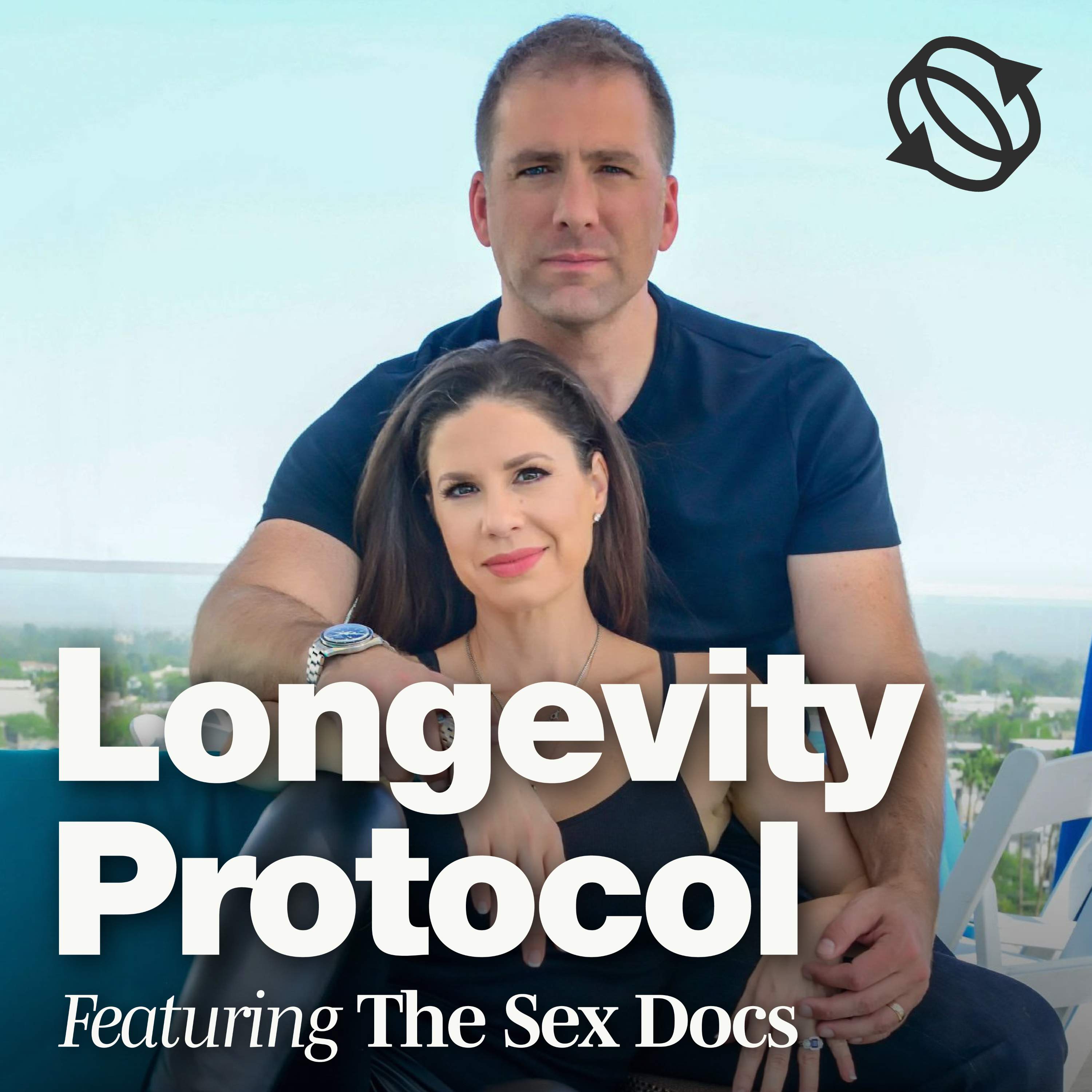
The highly anticipated Longevity Protocol podcast, featuring renowned holistic medical experts Dr. Cristina Romero-Bosch and Dr. John A. Robinson, known as @TheSexDocs on Instagram, debuts today and is now available for streaming!
Join the dynamic duo, leaders of Scottsdale’s premier wellness center, The Hormone Zone, and Relicus Medical Holdings, as they share their expertise and engaging discussions on health, sex, and what it truly means to live the longevity protocol.
The highly anticipated Longevity Protocol podcast, featuring renowned holistic medical experts Dr. Cristina Romero-Bosch and Dr. John A. Robinson, known as @TheSexDocs on Instagram, debuts today and is now available for streaming!
Join the dynamic duo, leaders of Scottsdale’s premier wellness center, The Hormone Zone, and Relicus Medical Holdings, as they share their expertise and engaging discussions on health, sex, and what it truly means to live the longevity protocol.Appears in episode

Recent Episodes