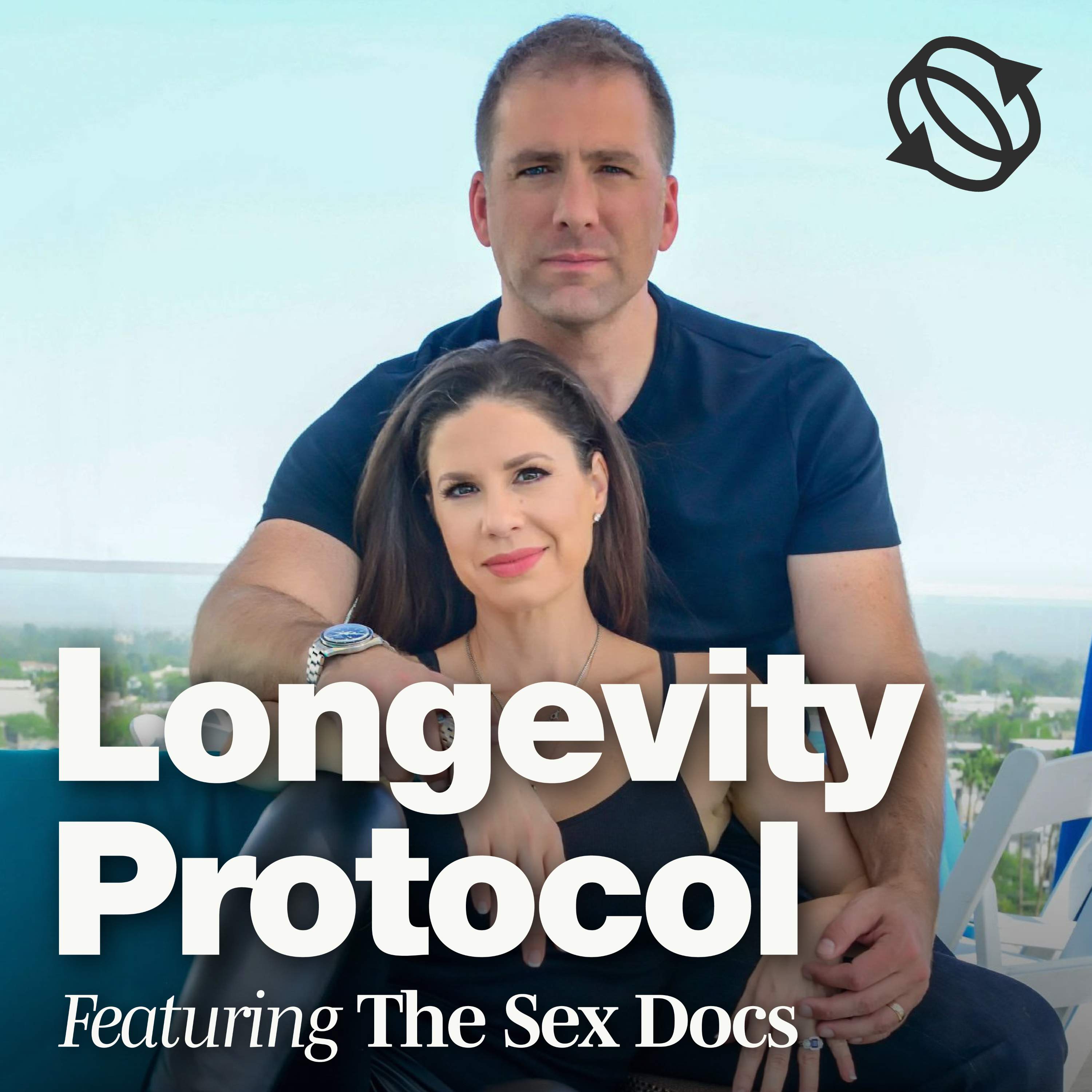
EPISODE: Age Gaps in Relationships & the Biology of Longevity
This episode tackles one of the most polarizing relationship topics in modern culture:
Age differences in relationships.
We’re examining:
Evolutionary biology
Fertility timelines
The manosphere vs modern feminism
Double standards
Hormone science
Nervous system regulation
And the direct impact of relationship dynamics on longevity
The Culture War: Why This Topic Is Explosive
The age-gap debate has become symbolic of something bigger.
The Manosphere Argument
Men increase in value with age (status, income, competence).
Women decrease in value with age (fertility decline).
High-performing men should pursue younger women. Trophy wife.
Men seek:
Sexual attraction, Admiration, Loyalty, Emotional stability, PEACE!!
They can get intellectual stimulation from:
Business,Friends, Mentors
Dr Robinson DISAGREES with this aspect, wanting and needing intellectual stimulation from his wife.
The Modern Feminist Counterpoint
Large age gaps often reflect power imbalance.
Youth obsession is patriarchal conditioning.
Women don’t “expire” at 30.
Menopause actually shows that women can move into a place of internal power and utility for society. The croan stage.
Attraction should not be reduced to fertility metrics.
The Biological Reality (For Both Sexes)
Female Fertility
Peak fertility: early–mid 20s
Noticeable decline after 35
Steep drop after 40
Male Fertility
Gradual decline with age
Rising sperm DNA fragmentation
Testosterone declines ~1% per year after 30–35
Men do not “age like wine” hormonally without intervention.
How Much of an Age Gap Is “Good”?
Globally, men are typically 2–4 years older than their partners.
Divorce rates
1-year age gap → ~3% higher chance of divorce compared with partners of the same age.
5-year age gap → ~18% higher divorce likelihood.
10-year age gap → ~39% higher chance of divorce.
20-year age gap → ~95% higher odds of divorce.
30-year age gap → ~172% higher likelihood of divorce.
“Modern Divorce Laws Skew the Numbers”
Divorce courts financially disadvantage men.
Women initiate ~70–80% of divorces in Western countries.
Younger women may be more likely to leave once they gain leverage.
Younger women in age-gap marriages may “upgrade” later.
Social media expands perceived mate options.
Women exercising upward mobility, not evidence the pairing was flawed.
From a longevity perspective
Are energy levels aligned? Are lifestyle goals synchronized? Are both partners metabolically and hormonally optimized? Is there mutual respect and shared direction?
A 15-year gap with shared vitality is healthier than a 3-year gap filled with stress and resentment. Shared trajectory matters more than birth year.
Here’s the truth:
Biology doesn’t negotiate fairness.
Men are visually wired toward fertility cues.
Women are historically wired toward competence and security.
What Actually PHYSIOLOGICALLY Defines a “Quality Relationship”?
From a physiological standpoint, a high-quality relationship:
Lowers baseline cortisol
Improves heart rate variability
Improves sleep depth
Enhances nitric oxide production
Improves immune resilience
Reduces cardiovascular events
Decreases dementia risk
Marriage itself doesn’t create longevity. Relationship quality does.
Chronic relational stress increases:
CRP
IL-6
Blood pressure
Insulin resistance
Visceral fat
Testosterone suppression
Peace in the home is biologically anti-inflammatory.
Do Men Live Longer With Younger Wives?
Some observational studies suggest men with younger spouses may experience reduced mortality.
Higher activity levels
Greater sexual frequency
Increased motivation for self-care
Status reinforcement
But large age gaps can also introduce:
Social scrutiny
Insecurity
Financial pressure
Caretaking imbalance later in life
Men MAY ask
Is she attracted to me? Or attracted to my status, lifestyle, or security?
BUT, this is a question from a female mindset. Men who are established may understand, and NOT CARE, that she wants him for his financial status and social security versus his looks. That in fact may be enough for him. I think this is hard for a woman to see that. Dr Robinson
Sexual Frequency & Mortality
Higher sexual frequency has been associated with:
Lower all-cause mortality, SEE OUR OTHER EPISODE ABOUT THIS.
Improved endothelial function
Better nitric oxide production
Lower depression rates
Sex acts as:
A cardiovascular stimulus
A hormonal regulator
A bonding mechanism
But only when it occurs within emotional safety.
The Deep Longevity Concepts
Cortisol & Telomere Attrition
Relational hostility and emotional unpredictability accelerate cellular aging. Chronic stress has been associated with shorter telomeres and increased inflammatory signaling.
Endocrine Synchronization
Stable relationships tend to normalize:
Testosterone rhythms
Estradiol balance
Oxytocin release
Sleep-wake cycles
Attachment & Neuroprotection
Improves vagal tone
Enhances HRV
Reduces neuroinflammation
Lowers dementia risk
Loneliness AND high-conflict attachment increase neurodegenerative risk.
The Real Question
Does this relationship elevate both nervous systems? Does it reduce stress? Does it maintain attraction? Does it support long-term vitality?Does it create peace?
Share from 0:00
0:00
/
0:00
Transcript
Age Gaps in Relationships & the Biology of Longevity | The Longevity Protocol Ep. 42
Podcast Notes


The Longevity Protocol
The highly anticipated Longevity Protocol podcast, featuring renowned holistic medical experts Dr. Cristina Romero-Bosch and Dr. John A. Robinson, known as @TheSexDocs on Instagram, debuts today and is now available for streaming!
Join the dynamic duo, leaders of Scottsdale’s premier wellness center, The Hormone Zone, and Relicus Medical Holdings, as they share their expertise and engaging discussions on health, sex, and what it truly means to live the longevity protocol.
The highly anticipated Longevity Protocol podcast, featuring renowned holistic medical experts Dr. Cristina Romero-Bosch and Dr. John A. Robinson, known as @TheSexDocs on Instagram, debuts today and is now available for streaming!
Join the dynamic duo, leaders of Scottsdale’s premier wellness center, The Hormone Zone, and Relicus Medical Holdings, as they share their expertise and engaging discussions on health, sex, and what it truly means to live the longevity protocol.Appears in episode

Recent Episodes